

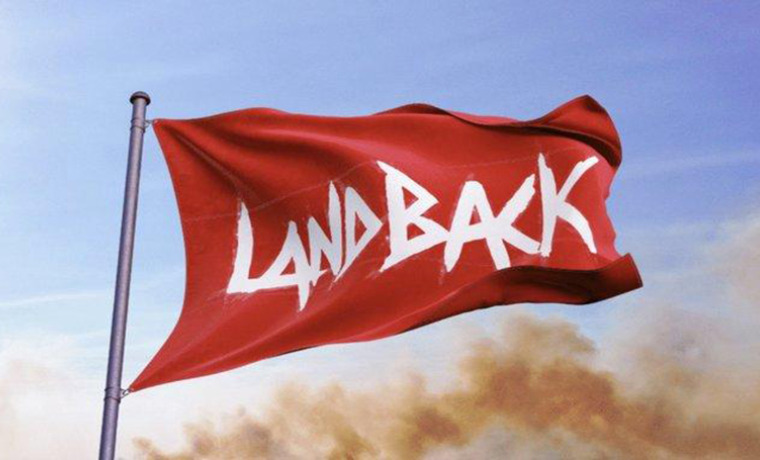
WDN has proudly hosted learning sessions that spotlight leaders working to rematriate stolen land. While the Landback movement has existed for generations, this movement has been elevated in recent years through Indigenous-led direct action protests and social media campaigns.
In order to understand what is meant by Landback, it is important to contextualize how Landback fits into a larger decolonization framework. Eve Tuck and K. Wayne Yang explain, “When we write about decolonization, we are not offering it as a metaphor; it is not an approximation of other experiences of oppression. Decolonization is not a swappable term for other things we want to do to improve our societies and schools.”
The same principle applies to Landback, in that the term is used literally to convey that physical land needs to be returned to Indigenous leaders.
Below, WDN member Cynthia Beard shares her thoughts about philanthropy’s role in the landback movement:
When I have had conversations about Landback with others who benefit from the white supremacist system that we live in, I have found that the discussions occasionally get caught up in the logistical concerns of how we would go about transferring ownership of the land, who would manage the land, and what would happen to those who give up personal wealth and power. The good news is that we don’t have to—nor should we try to—figure this out ourselves. Movement leaders and legal experts are leading the way in navigating the “hows.”
We also must remember that there is an internal aspect to this work. It involves healing ourselves by reconnecting with our own ancestors as well as supporting the Indigenous peoples in our communities and honoring matriarchal leadership.
There is not a one-size-fits-all approach to Landback. Rather than get immersed in the weeds, the role of funders should be focused on moving resources, listening, learning, and trusting that Indigenous communities are capable of managing the logistics in a way that will benefit us all.
The Landback Movement is Multifaceted
Krystal Two Bulls, has been involved in efforts to rematriate the sacred Black Hills in her role as Landback Program Director for the NDN Collective. These lands are sacred and have been desecrated by white supremacist projects, such as the carvings of Mount Rushmore, just west of the Pine Ridge Reservation that the Lakota tribe was forced onto after the broken Fort Laramie Treaty of 1868.
In 2021, Krystal Two Bulls was featured in a Teen Vogue article, where she explained, “Because once Indigenous peoples reclaim our land, once we reclaim language, once we reclaim our ability to manage the land in a way that is healthy, in a way that we understand and know, I think that is going to be the answer to a lot of these issues that we are running into.”
In other words, the goal of the Landback movement is not about ownership, but rather, about reclaiming a way of life that has been denied to Indigenous peoples through broken treaties, forced displacement, genocide, and assimilation efforts. The Ekvn-Yefolecv ecovillage is an example of how land and language are inextricably linked. The Maskoke people who live in the ecovillage in what is now called Alabama have returned to their traditional land after their ancestors were forcibly moved in the Trail of Tears, and they are now working to preserve the Maskoke language through traditional ceremonial and agricultural practices.
On the Northern Cheyenne Reservation in eastern Montana, Krystal Two Bulls’ mother, Lynette Two Bulls, has focused her efforts on a food sovereignty program for tribal members. Her program provides educational materials for growing produce, foraging, and using Indigenous herbs and medicines for elixirs, salves, and other healing purposes.
Meanwhile in the East Bay, Corrina Gould of Sogorea Te’ Land Trust and Tiny Gray-Garcia of POOR Magazine are working with other Bay Area activists to build self-determined living spaces for Indigenous and Black community members who have struggled with housing insecurity due to rapidly rising rents caused in part by the tech boom.
The Broader Context
Returning lands to Indigenous people is needed both to confront the worst impacts of catastrophic climate change and to address the wrongs of the past. This activism is having a measurable impact on tribes in North America, where government agencies have transferred management of parcels of land to tribal entities. Additionally, donors have played a role in supporting initiatives to purchase land that is now held by grassroots nonprofits and trusts. All of this is supporting the healing of those who have experienced multigenerational trauma on our collective journey to reconnect with land in a good way.
And while WDN is focused on initiatives on Turtle Island, or North America, it is also important to recognize that rematriation is happening all over the world. Our work here at home is situated within this global context, as Indigenous peoples are advocating for dignity and self-determination everywhere.
